
The Full Process Explained
When starting a new construction project, the first step is always preparing the land. Whether you’re building a custom home, a commercial property, or a new development, the process usually begins with demolition and continues through site preparation. Each phase requires precision, planning, and skilled execution to ensure the project gets off to the right start.
In this article, we’ll walk you through the full process from demolition to site preparation—explaining what each stage involves, why it matters, and how working with experienced contractors like Hippo Excavation ensures everything runs smoothly.
Step 1: Planning and Permits
- • Site assessment: Contractors evaluate the structure, soil condition, utilities, and environmental considerations.
- Permits and regulations: In Ontario, demolition and excavation require municipal approvals, environmental clearances, and utility checks to avoid safety risks and legal issues.
- • Safety planning: A safety strategy is designed to protect workers, surrounding properties, and the public.
Step 2: Demolition
- • Structural teardown: Depending on the project, contractors may use manual dismantling, heavy machinery, or even specialized cutting for walls and foundations.
- • Waste management: Responsible demolition includes sorting and recycling materials like concrete, metal, and wood. In Ontario, strict disposal guidelines must be followed.
- • Safety measures: Dust control, fencing, and vibration monitoring ensure surrounding properties and workers are protected.
Step 3: Excavation
- • Soil removal: Contractors dig to the required depth based on the building’s foundation design.
- • Utility checks: Any underground water, gas, or electrical lines must be identified and protected.
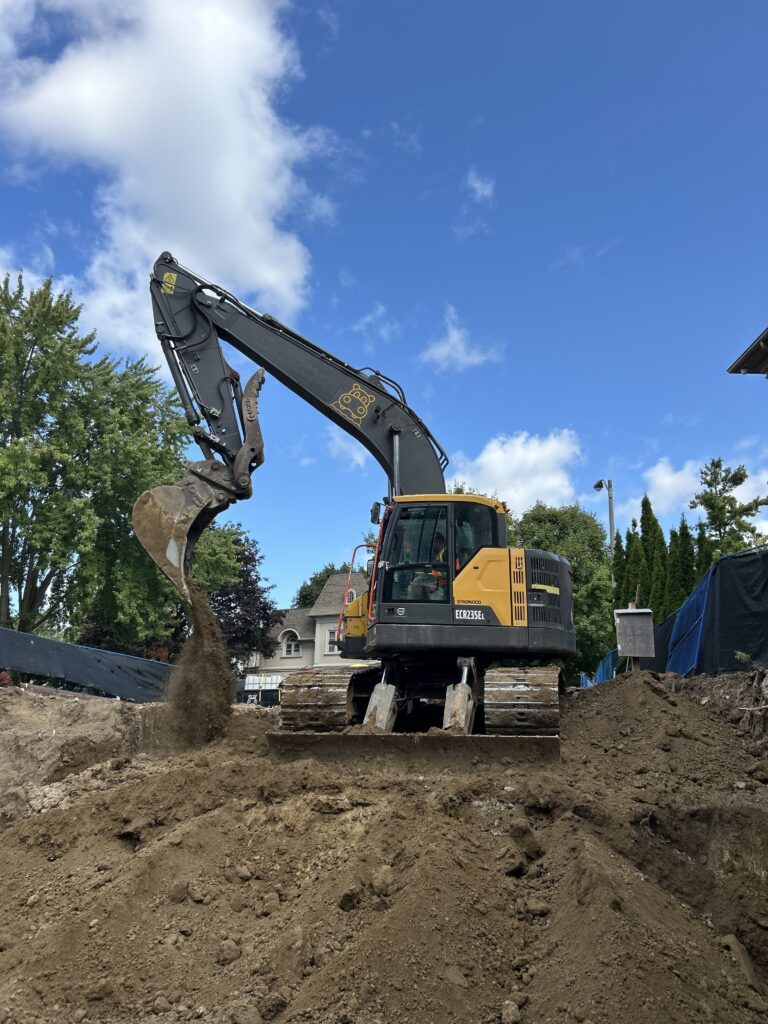
- • Heavy machinery: Excavators, loaders, and dump trucks are used to move soil and clear space for construction.
Step 4: Shoring and Ground Stabilization
- • Shoring systems: These may include soldier piles, lagging, sheet piling, or shotcrete.
- • Groundwater management: Pumps and drainage systems prevent flooding during excavation.
- • Safety inspections: Engineers regularly assess the integrity of the shoring system.
Step 5: Grading and Site Prep
- • Grading: Contractors level the ground to proper slopes for drainage and building stability.
- • Soil compaction: Ensures the soil is firm and capable of supporting the foundation.
- • Utility installation: Water, sewage, and electrical connections may be prepared before the foundation is poured.
Why Professional Contractors Matter
Conclusion
Demolition and site preparation set the foundation for the entire project. Done correctly, they ensure safety, efficiency, and a strong base for construction. Done poorly, they can lead to delays, cost overruns, or even structural issues.
If you’re planning a project in the GTA, partnering with a trusted contractor like Hippo Excavation is the smartest step to guarantee success—from teardown to build-up.
📞 Call us today at 416-876-8970
🌐 Visit: hippoexcavation.ca