
Introduction
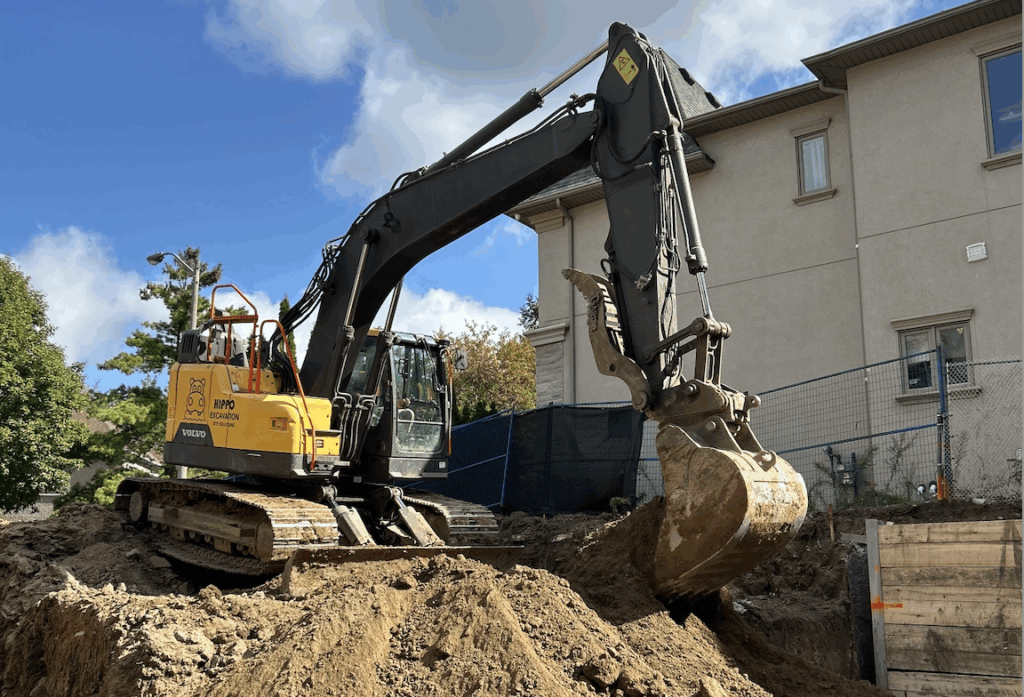
Excavation is one of the most critical stages in any construction project, but it’s also one of the most dangerous. Without proper support systems, soil can shift, trenches can collapse, and nearby structures can be compromised. That’s why shoring—the process of supporting excavation walls to prevent collapse—is an essential part of safe excavation practices in Toronto and the Greater Toronto Area (GTA).
In this article, we’ll explore the role of shoring, its different methods, and why it’s indispensable for modern construction projects.
Why Shoring Matters in Excavation
- When soil is disturbed, gravity takes over. The deeper the cut, the greater the risk of collapse. In urban environments like Toronto, where excavation often happens right beside existing homes, businesses, and roadways, shoring isn’t optional—it’s mandatory.
- • Safety: Prevents soil collapse that can injure workers.
- • Structural Integrity: Protects neighboring buildings and infrastructure.
- • Regulatory Compliance: Ontario’s Occupational Health and Safety Act requires protective systems in most trench and excavation scenarios.
- • Cost Control: Prevents costly accidents, delays, and lawsuits. Without proper shoring, even a small excavation can become a catastrophic failure.
Common Shoring Methods Used in the GTA
1. Soldier Pile and Lagging
A widely used system for deep excavations in urban areas. Steel H-piles are driven into the ground, and wooden or concrete lagging is inserted between them as the excavation progresses.
2. Hydraulic Shoring
Hydraulic cylinders and aluminum rails are installed to hold trench walls apart. Pressure is adjusted to stabilize the soil.
3. Sheet Piling
Steel sheets are driven vertically into the soil to create a continuous wall.
4. Secant Pile Walls
Intersecting concrete piles are drilled to create a strong wall.
Challenges in GTA Excavations
The GTA presents unique challenges for excavation contractors:
This is why shoring expertise is so valuable—one system does not fit all.
Shoring and Legal Requirements
Ontario law is strict when it comes to excavation safety. The Ministry of Labour requires protective measures whenever workers are exposed to trench walls deeper than 1.2 meters (4 feet).
Shoring isn’t just best practice—it’s a legal obligation.
The Benefits of Professional Shoring Services
Conclusion
In excavation, there is no room for shortcuts. Shoring is what makes construction projects in Toronto and the GTA safe, compliant, and cost-effective. From soldier piles to sheet piling, each method plays a critical role in protecting both workers and surrounding structures.
Hiring an experienced excavation contractor means more than digging—it means having the expertise, equipment, and legal knowledge to keep the project moving forward without compromise.
If you’re planning an excavation in the GTA, make sure shoring is at the top of your checklist. It’s not just about digging deep—it’s about building safely from the ground up.